From Timber and Charcoal to Steel Hulls: Why I Came Home to Build Ships on the Rajang
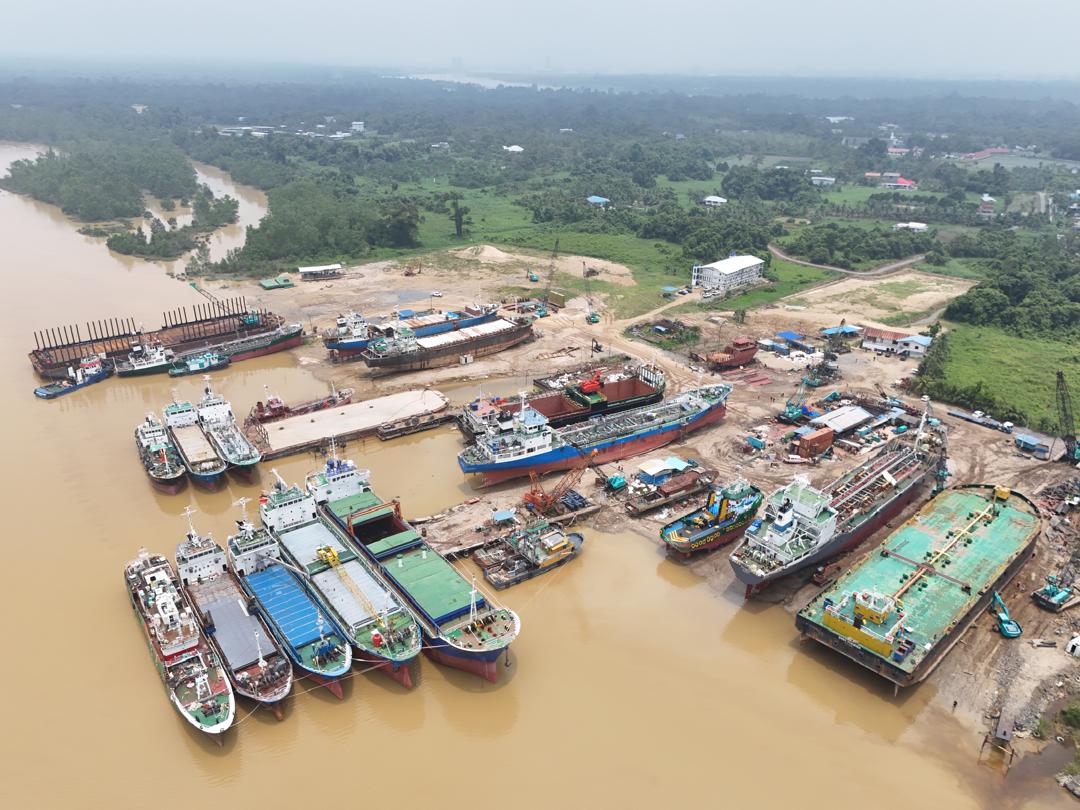
Sibu, the shipbuilding hub of Malaysia.
By Ts. Dr. Renco Yong, Executive Director, Gimhwak Group, Sibu, Sarawak. First published on Substack.
When people think of global shipbuilding, their minds usually jump to massive, automated dry docks in South Korea, Japan, or China. Almost none of them will have a small town come to mind – Sibu, which is a riverine town tucked along the banks of Sarawak’s Rajang River.
Yet for over a century, the water has dictated this town’s pulse. Historically, Sibu built its reputation as a powerhouse for timber exports, with logs moving downriver to feed regional and international markets. If you want to understand how a town famous for timber quietly transformed into one of Malaysia’s premier shipbuilding hubs, you don’t start by looking at modern CAD drawings or heavy marine engines. You start with the river trades—timber and charcoal.
Long before steel hulls and tugboats, my family’s story on the river began with my grandfather, Yong Siew Sing. Roughly a hundred years ago, he is one of the many who moved from China to Sibu, Sarawak, pursuing a better lifestyle. He lived in an era without electricity or air-conditioning, he started his business with three partners each held a 25% stake in a wooden vessel. They hauled timber from upriver down to the coast, eventually reaching ports as far as Singapore and Japan. Alongside the timber trade, my grandfather produced charcoal—burning wood under controlled conditions to create a slow-burning, low-smoke fuel that households prized for cooking and warmth.
It was honest, grueling work, and it taught our family an early lesson in maritime economics.
Back then, moving cargo meant relying on chartered boats. One day, my father, Yong Ing Hui, the eldest son in the family, looked at the ledger and asked a question that changed our family’s trajectory:
“Why are we paying other people to transport our charcoal? The money we earn is less than what we pay for shipping.”
That single realization pushed my father to buy and own a vessel of his own, he then ask my mum to crowd-fund shareholders from family and relatives to buy their own vessel. My father became the first among them to learn how to manoeuvre and operate it, while other uncles eventually took the helm as captain. Over time, as the family shouldered the bulk of the labor, they bought out the partnership to run the fleet independently. To keep those timber and cargo boats running, my father bought a plot of land along the river to berth and repair our fleet, started trading spare parts, and even imported used cranes to refurbish and recondition them for the timber industry.
Without realizing it at the time, he wasn’t just supporting the timber trade—he was laying the technical groundwork for the shipping business and shipyard industry.
Coming Home to a One-Ship Yard
Before stepping onto the shipyard floor full-time, I spent my university years in Melbourne at Swinburne University, completing a Bachelor’s degree in Marketing and Manufacturing Management in 1999, followed by a Master of Business Administration (MBA) in 2001. Having grown up around the smell of river mud, diesel, and welding arcs, returning to Sibu in 2002 to join the family business felt less like a conventional career move and more like stepping into a current that had been flowing long before I was born.
When I first walked into the yard, our operations were humble. We had a small team of six or seven workers and our capacity was strictly limited to building one vessel at a time. Building a single 22-meter-long tugboat took anywhere from 12 to 18 months, sometimes longer depending on cash flow and weather.
As Sibu’s economy evolved beyond traditional timber exports, our shipyards had to evolve too. In the old days, my father and uncles essentially practiced reverse engineering. Most vessels were built without formal architectural drawings, engineering calculations, or advance planning—they relied entirely on intuition, experience, and trial and error. Walking the yard, they would simply instruct the craftsmen or foreman by eye: “Make this section a little longer, weld that plate thicker, raise the height here.” Only after the vessel was launched and tested on the water would they bring in a naval architect to draw up the formal plans to match what had already been built.
That hands-on instinct was remarkable, and it got us started. But if we wanted Sibu’s shipbuilding industry to compete beyond local waters, we couldn’t build on trial and error forever. We had to marry the grit and practical wisdom of my father’s generation with modern naval engineering, structured management, and international quality standards.
After spending more than a decade working on the ground—navigating steel procurement, yard operations, and client demands—I realized that practical experience needed to be matched with deep technical mastery. In 2013, I began my PhD in Maritime Technology at Universiti Malaysia Terengganu (UMT), completing my doctorate in 2017. Studying naval technology while actively running shipbuilding operations allowed me to bridge academic research directly with real-world hull construction and marine engineering.
Looking back over the past 25 years, the transformation hasn’t happened overnight, nor did I do it alone. When my brothers—Jackie and Fenton—and my sisters—Jocelyn and Victoria—returned from overseas to join the helm alongside our parents, we began systematically scaling our capabilities.
Here is what it took to turn a small riverfront repair yard into an internationally recognized shipbuilder:
- Investing in Permanent Craftsmanship: In an industry notorious for relying heavily on transient contract workers, we made a deliberate choice to build a permanent, in-house team. Today, we employ around 200 dedicated staff across specialized disciplines—welding, fitting, planning, and naval design—alongside roughly 50 seafarers. Continuity of skill is what separates an average hull from a vessel built to weather decades at sea.
- Standardizing Quality: You cannot win international contracts on reputation alone; you have to prove your systems. We pushed hard to earn our ISO 9001 certifications—from ISO 9001:2000 in 2007 up to ISO 9001:2015—embedding strict quality control into every stage of construction, ship repair, and freight operations.
- Scaling Without Losing Precision: By upgrading our facilities and planning workflows, we grew from building one ship a year to a peak capacity of 16 new vessels annually, while handling more than 80 vessels a year for dry-docking and repairs.
Why Sibu Matters to the Maritime World
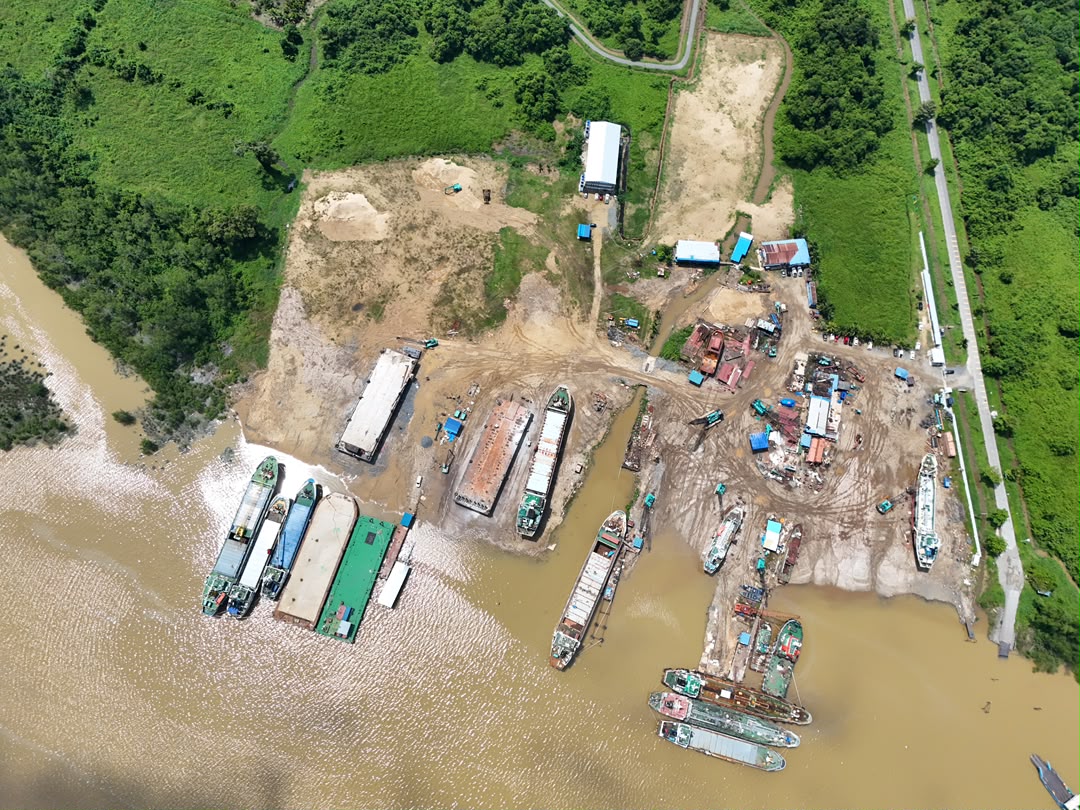
My involvement in shipbuilding has never been confined to the gates of our own yard. Over the years, whether serving as a professional technologist, working alongside fellow shipbuilders through the Sarawak Association of Maritime Industries (SAMIN), or advising on national maritime policies, my focus has always been the same: putting Sibu on the global maritime map.
People often ask why a town upriver in Sarawak should be building ocean-going tugs, barges, and tankers. The answer is simple: resilience and adaptability.
Sibu’s shipbuilders didn’t start with massive state subsidies or deep-water coastal ports. We grew out of the town’s deep roots in timber and river transport—learning how to build tough, reliable workboats out of necessity, and gradually earning the trust of clients across Southeast Asia, the Pacific, and beyond. Every time a vessel slides down the slipway on the Rajang River—whether it’s a coastal tanker or a specialized workboat—it carries the collective pride of local welders, engineers, and families who built this industry from scratch.
Standing on stage with my parents and brother to accept the bronze medal at the 2025 Premier of Sarawak Industry Excellence Award (PSIEA) was a quiet reminder of how far that journey has come. Three generations earlier, our family was hauling timber and worrying about the cost of shipping bags of charcoal downriver. Today, we are designing, certifying, and launching steel vessels that keep regional trade moving.
Shipbuilding isn’t an easy industry. It tests your patience through fluctuating steel prices, tight delivery schedules, and shifting global tides. Yet, there is nothing quite like watching raw steel plates take shape on the slipway and finally meet the water.
As long as the Rajang flows, Sibu will keep building—and I am proud to still be on the yard floor, helping write the next chapter.
Ts. Dr. Renco Yong | Shipbuilding & Maritime Heritage in Sibu, Sarawak
More from the journal
All posts →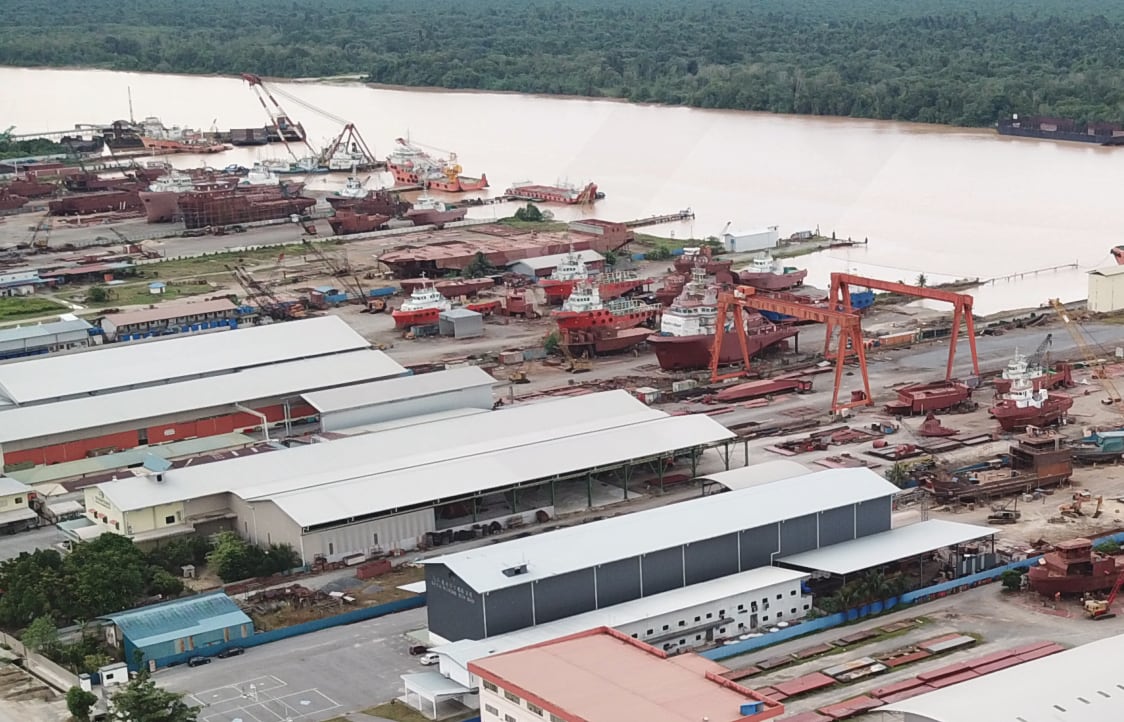 Article
History of Sarawak Maritime Industry
From boats built under coconut trees in Telok Selalo to a multi-million ringgit industry: how Sibu became the heartland of Malaysian shipbuilding.
 Article
The Story of the Name I Chose and the Identity I Built
Renco or King.
 Article
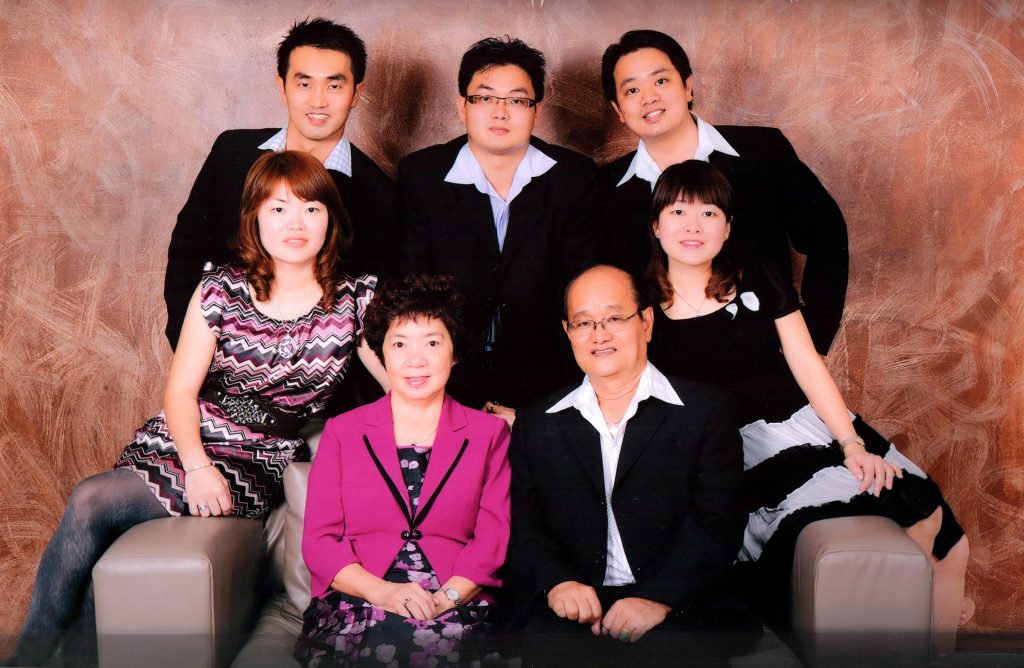
Sibu: The heartland of Malaysia’s shipbuilding industry
Sarawak Tribune profiles the Yong family and how a charcoal and river-transport business grew into Gimhwak Group.